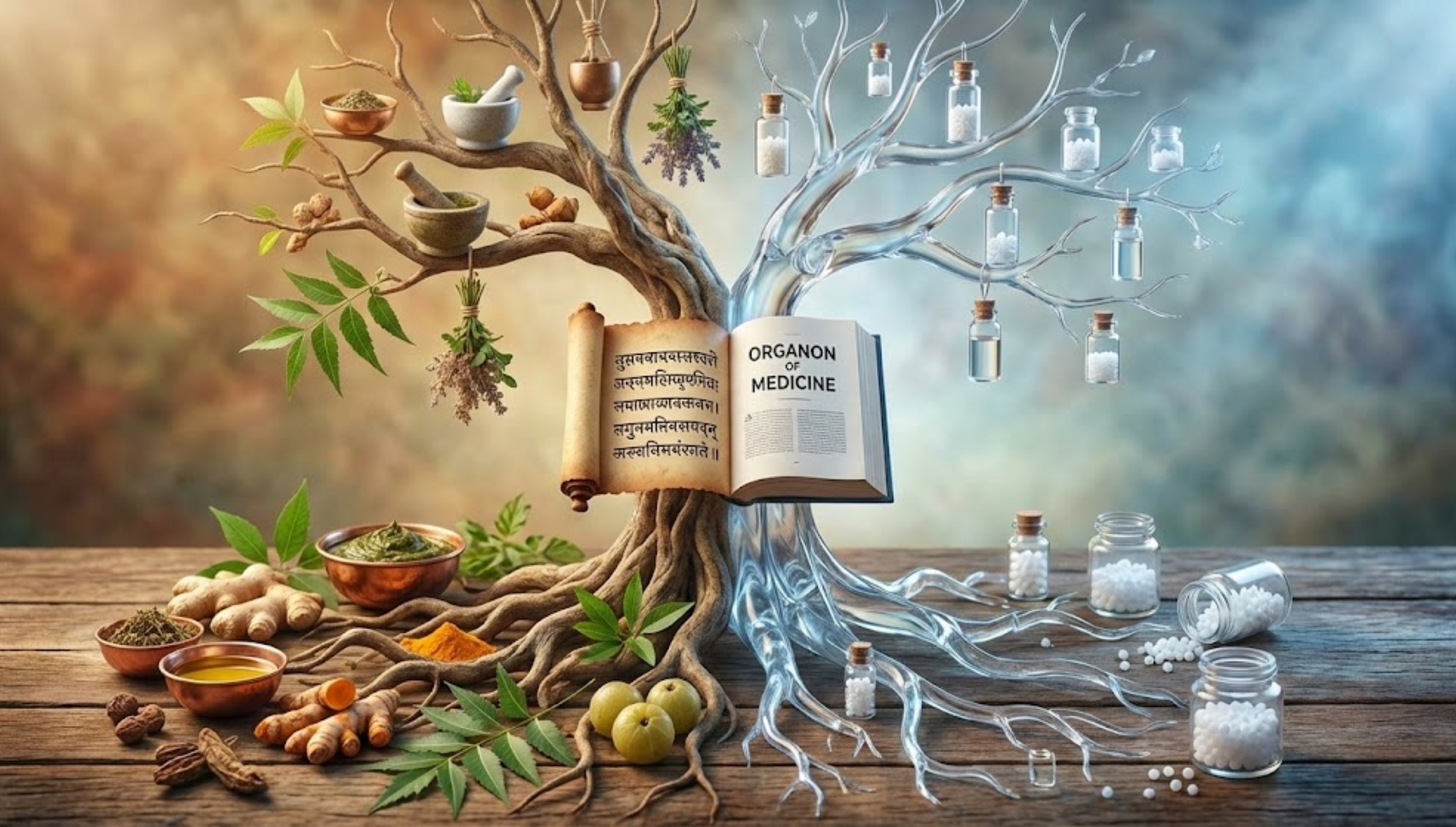
Confused about which natural approach fits your health goals? Here is how Homeopathy is different from naturopathy.
Introduction
There is a growing interest in natural and integrative health approaches across the world to support overall well-being. Homeopathy and naturopathy are part of natural healthcare options. However, some people are unaware of the differences. This is mainly because they are often grouped together. Both systems are based on unique philosophies and methods of treatment. They aim to support the body’s natural ability to heal. The goal of this article is to clarify the differences between Naturopathy and Homeopathy. Understanding the difference between them can help you make informed choices.
Historical background and development
Naturopathy
Naturopathy combines various therapies. Therefore, it falls under a broad healthcare system. It brings various therapies together. Naturopathy has its roots in a mix of traditional healing, physical therapies, nutrition science, and lifestyle medicines. With time, it evolved to prevent diseases. Now it focuses on supporting the body through natural ways with healthy living.
Homeopathy
Homeopathy is developed through clinical observation and experiments. It is based on a clearly defined therapeutic principle. The system studies each symptom in detail to select the proper individualized remedy. Both systems came into existence as natural alternatives to conventional medical systems. The goal was to offer gentler, patient-centered approaches to healing.
Core philosophy: How each system views health
Naturopathy
According to naturopathy, health is the result of a balance. It supports healing through natural and non-invasive ways. In naturopathy, prevention of disease and long-term wellness are key focuses. Therefore, it encourages sustainable habits that help maintain vitality.
Homeopathy
According to homeopathic philosophy, your body has the ability to heal with appropriate stimulation. It treats the person as a whole, not just the diagnosed condition. Your Unique physical, emotional, and mental symptoms are taken into consideration for the treatment. Two people with the same diagnosis receive entirely different homeopathic treatments.
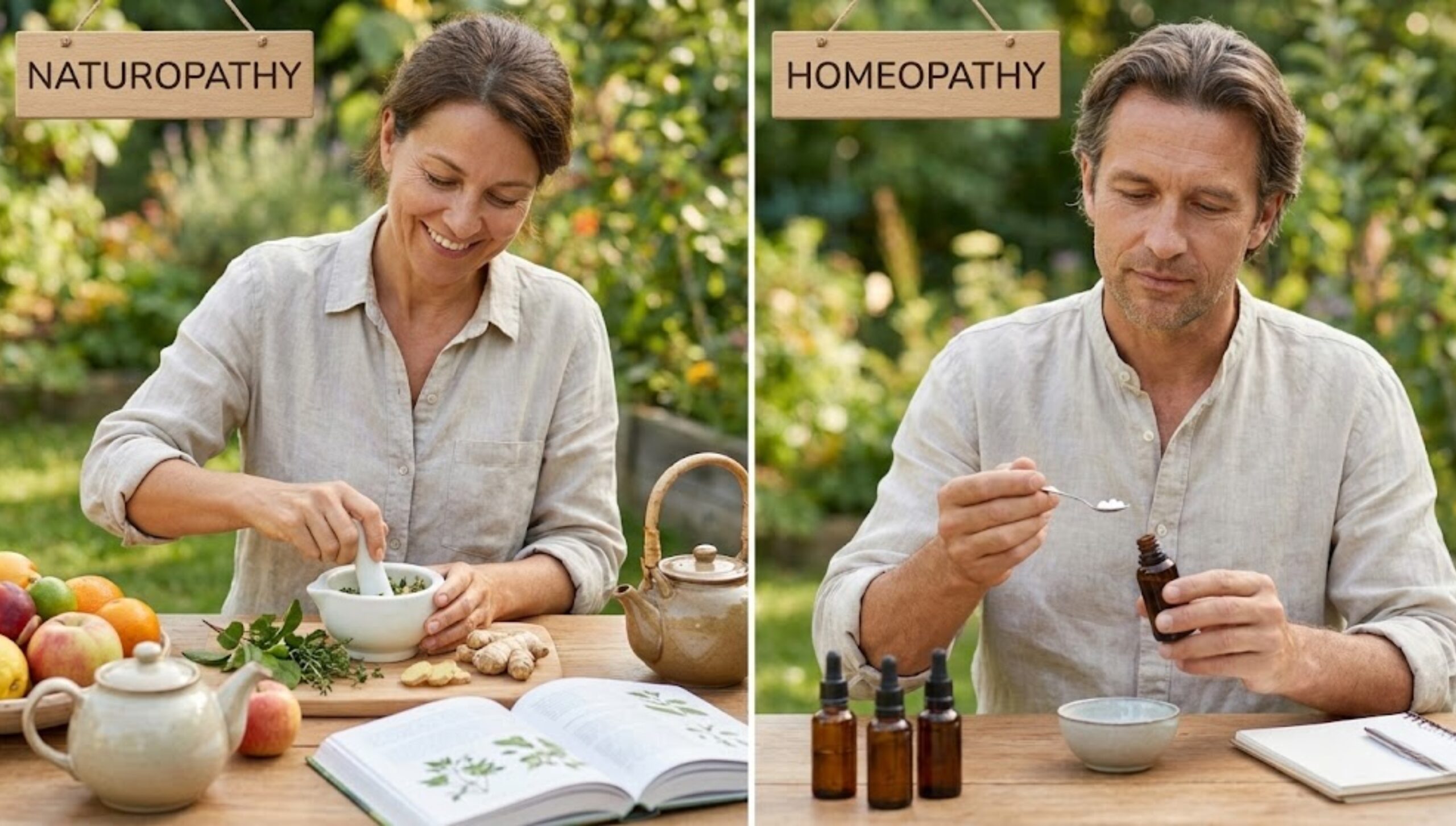
The key distinction is that while homeopathy focuses on individuals, naturopathy applies multiple supportive tools.
Approach to assessment and case evaluation
Naturopathy
In Naturopathy, assessment involves evaluating your diet, stress levels, physical health, and lifestyle. It focuses on the factors that are affecting well-being. Following the identification of those factors, natural intervention is applied to correct any imbalance.
Homeopathy
In Homeopathic assessment, case taking is done in a detailed and structured manner, as practiced at LifeCare Wellness Centre. This is done to understand everything about the person. Case taking includes the analysis of the symptom. This means that every symptom is addressed uniquely, as it could be present in different ways in every person. Symptoms are further analysed to find what makes them better or worse. A person’s emotional responses are also a major part that is focused on in this process. The focus is not on the disease label. Every detail helps guide remedy selection. Homeopathic treatment is highly specific to the individual, as its strength lies in this depth of personalization.
Treatment modalities and therapeutic tools
Naturopathy
Naturopathy treatment combines multiple therapies at a time. It focuses on choosing balanced food that nourishes the body. Additionally, creating healthier routines is encouraged with lifestyle modifications. If needed, natural supplements are also used to address any deficiencies. Physical therapies such as massages and hydrotherapy are included to enhance overall recovery.
Homeopathy
Homeopathy uses specifically chosen remedies that are given in very minimal doses. They are selected considering the individual’s entire symptom profile. Therefore, the remedy is selected with precision, and only one remedy is prescribed at a time. The treatment is gentle and non-invasive, allowing the practitioner to observe the body’s response. Future treatment is based on changes in your symptoms. Alterations in medicines are made based on a person’s response to them. This ensures highly personalized care throughout the journey.
Scope of conditions addressed
Naturopathy and homeopathy are commonly used for chronic and functional health problems. Allergies, skin problems, digestive troubles, or stress-related concerns are frequently included in this. Long-standing cases generally require personalized care. Therefore, people choose these systems to get permanent solutions. Both systems play a supportive role alongside conventional medical treatment. Homeopathy is preferred by those looking for tailored, customized care that involves symptom-specific care. Rather than focusing on diagnosis alone, it aims to understand how a condition manifests uniquely in each person.
Individualization and long-term care approach
Naturopathy
Naturopathy focuses on the overall balance of the body. It takes lifestyle guidance and preventive strategies into consideration to achieve balance. It centres around long-term care that sustains healthy habits and reduces risk factors through education and support.
Homeopathy
In homeopathy, continuous reassessments are based on symptom changes. This is done because our physical and emotional states keep changing. Adjustments in treatment are based on this continuous process. Homeopathy gives special importance to this process, making it useful for long-term support. Moreover, continuous reassessment also makes it a highly individualized system. This adaptability allows Homeopathy to evolve as per the patient’s needs.
Safety, integration, and patient choice
Both systems offer treatment without aggressive interventions and are gentle in nature. But it is important to always take professional guidance. With proper guidance, you can combine these systems with functional medicine. Patient education plays a key role in achieving effective results. Understanding the purpose of treatment allows you to participate actively in your health journey.
Choosing between naturopathy and homeopathy
Choose naturopathy if you are seeking multiple natural therapies. If you are a person who likes lifestyle-based support and preventive strategies, naturopathy is for you. But opt for homeopathy if you want highly individualised symptoms-focused care. The final choice to choose between homeopathy and naturopathy depends on your treatment preferences and health goals. Remember that both systems aim to support well-being without competing with one another.
Conclusion
Both homeopathy and naturopathy are complementary healthcare systems. Irrespective of their different philosophies, both systems support the body’s natural ability to heal. Knowing why and how the two systems work will help you choose the best healthcare options for you. Naturopathy focuses on achieving balance in your lifestyle and preventing problems. But Homeopathy is well known for its precision, personalized approach, and gentle healing. At LifeCare clinic, we ensure that every care approach is thoughtfully aligned with their needs.
References
- Seetharaman, M., Krishnan, G., & Schneider, R. H. (2021b). The future of medicine: Frontiers in integrative health and medicine. Medicina (Kaunas, Lithuania), 57(12), 1303. https://doi.org/10.3390/medicina57121303
- Snider, P., & Zeff, J. (2019). Unifying Principles of Naturopathic Medicine Origins and Definitions. Integrative Medicine: A Clinician’s Journal, 18(4), 36. https://pmc.ncbi.nlm.nih.gov/articles/PMC7219457/
- Loudon, I. (2006). A brief history of homeopathy. Journal of the Royal Society of Medicine, 99(12), 607–610. https://doi.org/10.1177/014107680609901206
- Finnell, J. S., Snider, P., Myers, S. P., & Zeff, J. (2019). A hierarchy of healing: Origins of the therapeutic order and implications for research. Integrative Medicine, 18(3), 54–59. https://www.ncbi.nlm.nih.gov/pmc/articles/PMC7217399/
- Das, Eswara. (2019). Understanding the Principles of Homeopathy on A Research Perspective. Journal of Complementary Medicine & Alternative Healthcare. 9. 10.19080/JCMAH.2019.09.555756. (N.d.-b). Researchgate.net. Retrieved January 22, 2026, from https://www.researchgate.net/publication/333373461_Understanding_the_Principles_of_Homeopathy_on_A_Research_Perspective
- Fleming, S. A., & Gutknecht, N. C. (2010). Naturopathy and the primary care practice. Primary Care, 37(1), 119–136. https://doi.org/10.1016/j.pop.2009.09.002
- Paterson, J., & Betti, L. (2001). Individualization in homeopathy: Clinical case analysis. Evidence-Based Complementary and Alternative Medicine, 1(1), 25–33. https://pmc.ncbi.nlm.nih.gov/articles/PMC11782339/
- Smith, M. J., & Logan, A. C. (2002). Naturopathy. Medical Clinics of North America, 86(1), 173–184. https://doi.org/10.1016/S0025-7125(03)00079-8
- Jütte, R., & Riley, D. (2005). A review of the use and role of low potencies in homeopathy. Complementary Therapies in Medicine, 13(4), 291–296. https://doi.org/10.1016/j.ctim.2005.10.003
- Falci, L., Shi, Z., & Greenlee, H. (2016). Multiple chronic conditions and use of complementary and alternative medicine among US adults: Results from the 2012 National Health Interview Survey. Preventing Chronic Disease, 13, Article 150501. https://www.cdc.gov/pcd/issues/2016/15_0501.htm
- National Center for Complementary and Integrative Health. (2025). Naturopathy. U.S. Department of Health and Human Services. https://www.nccih.nih.gov/health/naturopathy
- Witt, C. M., Lüdtke, R., Baur, R., & Willich, S. N. (2005). Homeopathic medical practice: Long-term results of a cohort study with 3,981 patients. BMC Public Health, 5, 115. https://doi.org/10.1186/1471-2458-5-115https://www.ncbi.nlm.nih.gov/pmc/articles/PMC1298309/
- Juhi, A., Komarraju, S. L., D, S., Muralidharan, S., & Mondal, H. (2025). Integrating naturopathy with modern medicine: challenges, solutions and future directions – A review. Bioinformation, 21(7), 2201–2205. https://doi.org/10.6026/973206300212201
- Dewangan, S., & Kumar, B. B. (2024). The relevance of naturopathy as a therapeutic tool in the modern era: A narrative review. Alternative Therapies in Health and Medicine, 30(4), 38–41. https://pubmed.ncbi.nlm.nih.gov/38702164/
- Complementary, alternative, or integrative health: What’s in a name? (n.d.). NCCIH. Retrieved January 22, 2026, from https://www.nccih.nih.gov/health/complementary-alternative-or-integrative-health-whats-in-a-name
Book a Consultation
It’s easy and free!